
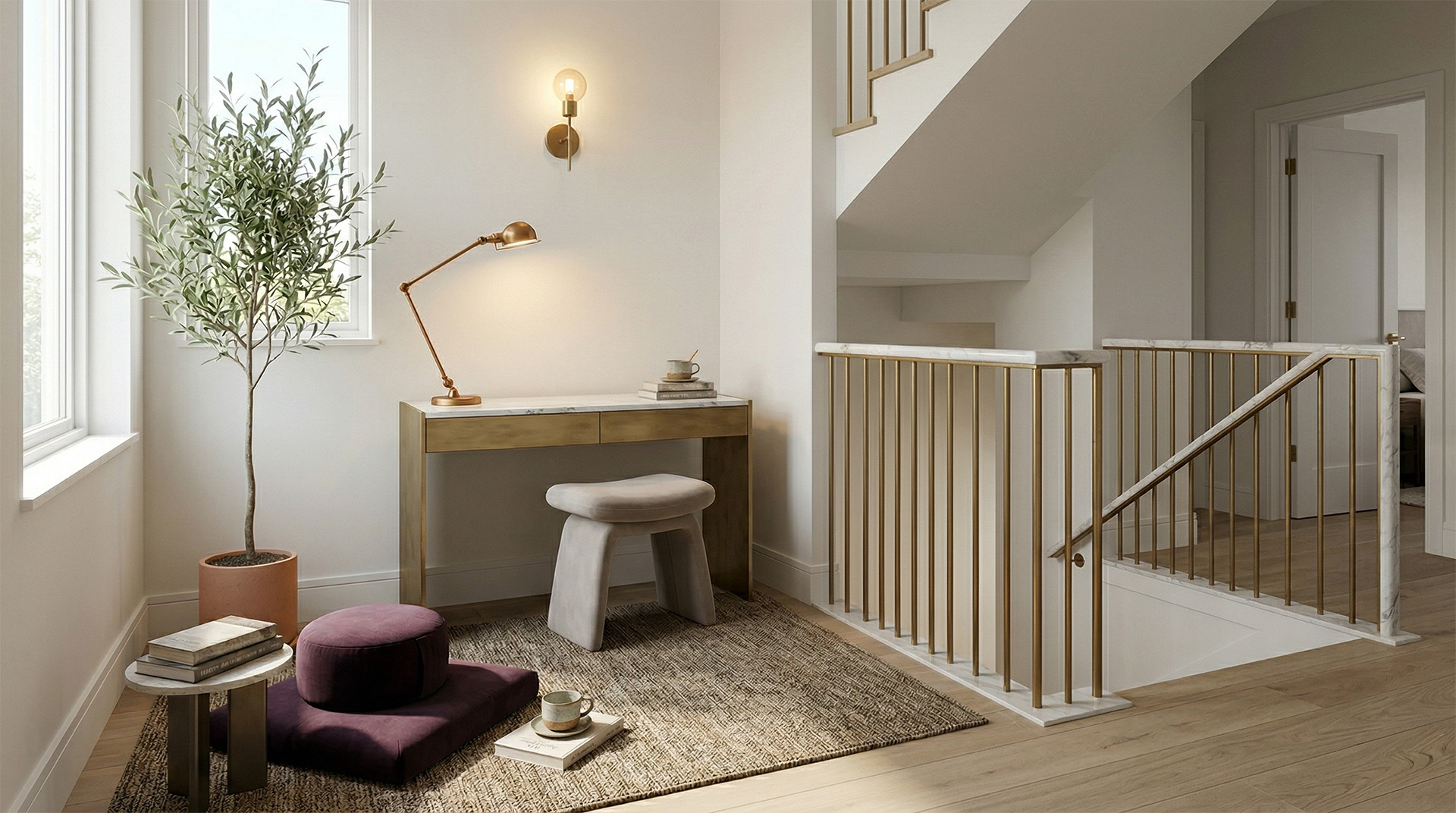
Today’s buyers aren’t looking for more square footage—they’re looking for smarter square footage.
One trend is standing out above the rest: The Hallway Flex Space. Those awkward landings, wide hallway turns, and “dead zones” outside bedrooms are no longer just wasted transit areas. In 2026, they are high-value “pocket zones” that can actually tip the scales on a home sale. If you’re planning to list this season, here is how to stage these nooks to add massive perceived value to your floor plan.
What is the “Hallway Flex,” and Why Now?
With hybrid work now a permanent fixture and the “wellness-at-home” movement reaching its peak, buyers are hunting for “buffer zones.” They want a space to transition from “Sleep Mode” to “Work Mode” without needing a dedicated 12×12 room.
By staging these corners, you aren’t just selling a hallway; you’re selling functionality.
1. The “Pocket Office” (The 9-to-5 Nook)
The most popular use for a hallway landing in 2026 is the micro-office.
- The Setup: A floating desk or a slim console table, a high-design ergonomic stool, and a single, stylish task light. Consider adding a “Tech Charging Station” with hidden cords for added appeal.
2. The “Z-Zone” (The Meditation/Analog Space)
As we see a surge in “Analog Rooms” this year, buyers are craving spaces to disconnect.
- The Setup: A low-profile floor cushion or a petite velvet armchair, a small side table for a tea cup, and a stack of physical books.
- The “Pro” Touch: Use biophilic staging. A tall, architectural plant (like a Fiddle Leaf or a 2026-favorite Olive Tree) in that corner signals “freshness” and “calm” during a hectic open house.
3. The “Drop & Glow” (The Secondary Mudroom)
If your landing is near the top of the stairs, stage it as a secondary organizational hub.
- The Setup: Modern wall hooks for a designer robe or a linen tote, and a sleek bench with shoe storage underneath.
- The “Pro” Touch: Replace dated overhead lighting with a warm-glow wall sconce. In 2026, “sensory lighting” is a major selling point. It makes an awkward hallway feel like an intentional gallery.
Three Golden Tips for Staging Small Spaces
If you’re DIY-ing your staging this April, keep these 2026 design principles in mind:
- Scale is King: Don’t use standard-sized furniture. Use “apartment-scale” pieces to make the nook look bigger than it is.
- The “Scent-Scape”: Since hallways often lack windows, use a high-end, subtle room diffuser (think Eucalyptus or White Tea) to ensure the “Flex Space” feels airy, not stagnant.
- Define the Boundary: Use a small, textured rug to “zone” the area.
In a market where inventory is finally growing and buyers have choices, differentiation is everything. A well-staged hallway flex space can turn a standard 3-bedroom home into a “3-Bedroom + Office + Zen Den” in the eyes of a buyer—without you ever swinging a hammer.